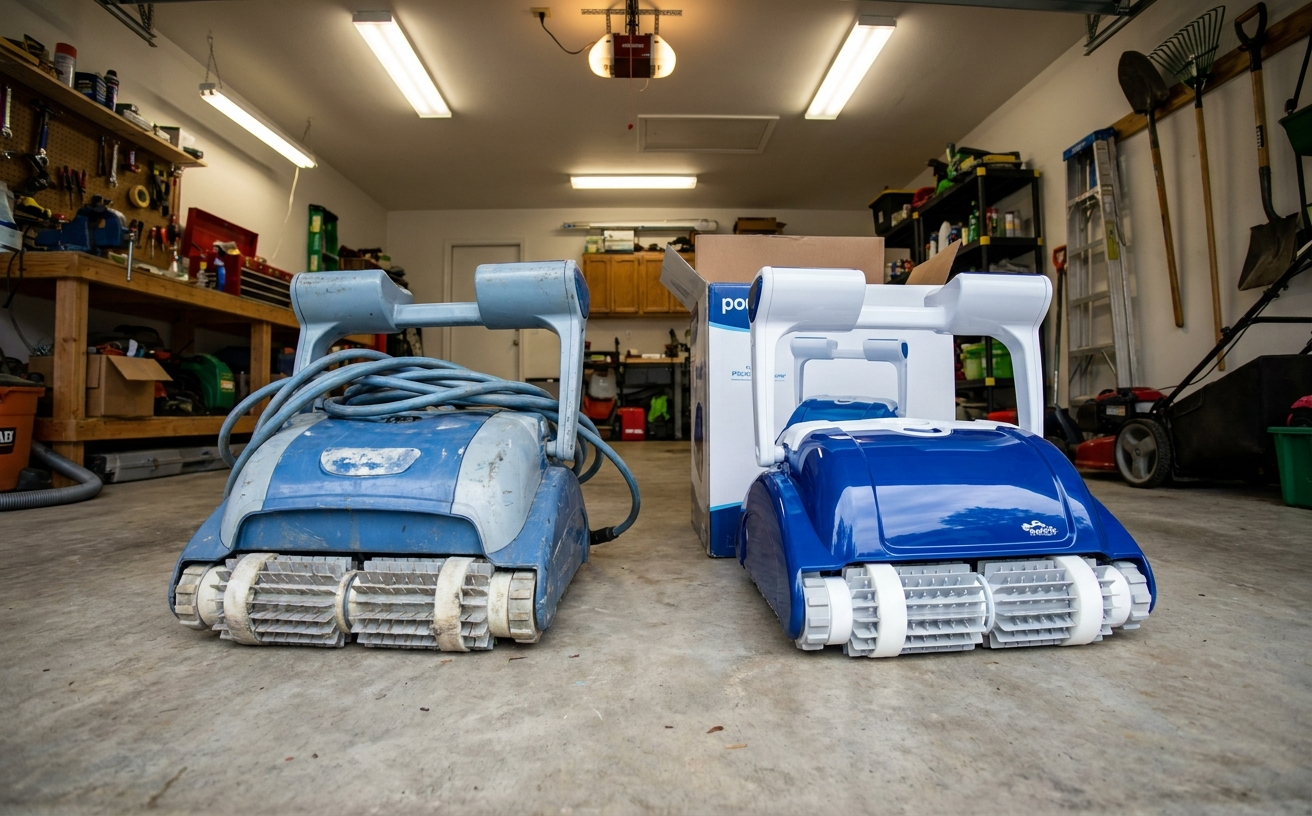
Why Your Pool Cleaner Died, and Your Neighbor’s Is Still Running
Two pool owners buy the same model in the same month. Three years later, one is still running and the other has been replaced twice. The model is not the variable. The conditions of use are. And the differences in how the machines are treated are not always obvious.
Pool cleaner longevity is determined by a combination of water chemistry, storage conditions, maintenance habits, and usage patterns. Understanding which factors shorten the lifespan and which extend it allows you to get the maximum years of service from any device you own.
Water Chemistry: The Silent Killer
Aggressive water chemistry degrades every component it touches. Low pH corrodes metal parts, including motor shafts and electrical contacts. High calcium hardness leaves scale deposits on impellers and inside pump chambers, reducing efficiency and eventually causing mechanical failure.
The most damaging condition is consistently low pH, which accelerates corrosion of rubber seals and metal fasteners. A cleaner that operates in water with a pH below 7.0 for extended periods will experience seal failures months earlier than one operated in balanced water. The damage is cumulative and invisible until a seal fails and the motor floods.
High chlorine levels are less immediately damaging but degrade rubber and plastic components over time. Cleaners that are left in the pool during shock treatments — when chlorine levels may exceed ten ppm — experience accelerated aging of tracks, brushes, and cable jackets.
Storage: Where the Machine Spends Most of Its Time
A cleaner is in the pool for two to four hours per cycle. It is in storage for the remaining twenty to twenty-two hours. The storage environment has more influence on longevity than the operating environment, because exposure time is longer.
Sunlight is the primary enemy during storage. UV radiation degrades plastic housings, making them brittle and prone to cracking. A cleaner stored on an open pool deck in direct sunlight will develop housing cracks within two to three years. One stored in a shaded cabinet or garage will maintain housing integrity for five years or more.
Freezing temperatures during winter storage cause water trapped inside the pump chamber to expand and crack the housing. Any cleaner stored in a climate that drops below freezing must be completely drained and dried before storage. Even a small amount of residual water can cause a crack that renders the pump chamber useless.
Maintenance Habits: The Dividing Line
The single most impactful maintenance habit is cleaning the filter after every use. A clogged filter forces the pump to work harder, increasing motor temperature and reducing water flow through the cooling chamber. Sustained operation with a partially clogged filter reduces motor life by twenty to thirty percent. This is the most common preventable cause of failure in any robotic pool cleaner, and it requires only thirty seconds of effort after each cycle.
The second most impactful habit is inspecting the tracks and brushes for wear. Worn tracks lose traction and the motor works harder to climb walls, drawing more current and generating more heat. Worn brushes allow debris to bypass the scrubbing action, reducing cleaning effectiveness and causing the owner to run longer cycles, which adds more motor hours.
Replacing tracks and brushes at the first sign of wear is inexpensive and extends the motor’s life by reducing the mechanical load. Waiting until tracks are completely bald forces the motor to compensate, which shortens its lifespan.
Usage Patterns: More Is Not Always Worse
Counterintuitively, cleaners that run more frequently tend to last longer than those that run infrequently. Regular operation keeps seals lubricated and prevents scale from building up inside the pump chamber. A cleaner that runs three times per week maintains better internal condition than one that sits unused for three weeks and then runs a marathon cycle.
The exception is running the cleaner longer than necessary. If a two-hour cycle cleans the pool completely, running a four-hour cycle doubles the motor hours without improving the result. Over a season, the extra runtime adds hundreds of unnecessary motor hours.
The sweet spot is frequent, appropriately timed cycles. Run the cleaner as often as needed to maintain cleanliness, but not longer than necessary per cycle. This minimizes motor hours while maximizing the preventative benefits of regular operation.
The Preventable Failures
Most cleaner failures fall into predictable categories. Seal failures from chemical exposure. Housing cracks from UV damage or freezing. Motor burnout from clogged filters and worn tracks. Cable failures from improper coiling and storage.
Every one of these failures is preventable with basic maintenance. An automated cleaning device that is stored out of the sun, used in balanced water, cleaned after each use, and winterized properly will reliably exceed its expected lifespan. One that is left in the sun, operated in unbalanced water, and stored with a dirty filter will fail early. The model matters less than the care.
If your neighbor’s cleaner outlasted yours, the reason is probably not luck. It is probably habits. The good news is that habits are free to change. Start with the filter, the storage location, and the water chemistry. These three factors account for the majority of premature failures and require no special tools or expertise to manage.