
Florida Gators Football vs Texas Longhorns Football Match Player Stats: A Deep Dive into the Numbers
When you Florida Gators Football vs Texas Longhorns Football Match Player Stats about powerhouse programs in college football, it does not take long before the conversation turns to the Florida Gators football and the Texas Longhorns football. Both teams carry rich traditions, elite recruiting pipelines, and a history of producing NFL-level talent. So when these two programs meet on the field, the spotlight naturally shifts to player stats, individual performances, and the numbers that ultimately define the game.
In this article, we will break down the Florida Gators football vs Texas Longhorns football match player stats in a structured and analytical way. We will examine quarterback efficiency, rushing production, receiving impact, defensive dominance, and special teams contributions. This is not just a box score recap; it is a complete performance evaluation that looks at how individual numbers shape the overall outcome.
Let’s get into the details.
Quarterback Performance: Efficiency, Accuracy, and Game Control
Every major college football matchup begins and ends with quarterback play. In a clash between Florida and Texas, the signal-callers typically determine tempo, scoring rhythm, and momentum swings.
From a statistical perspective, quarterback evaluation starts with completion percentage and yards per attempt. In this matchup, both teams demonstrated contrasting styles. Florida’s quarterback leaned into a balanced attack, completing a high percentage of short-to-intermediate passes. His stat line reflected efficiency: strong completion numbers, limited interceptions, and consistent third-down conversions. That kind of steady output does not always create highlight reels, but it wins football games.
On the Texas side, the quarterback displayed a more aggressive approach. With deeper throws and higher-risk passes, the yards per attempt were noticeably higher. However, that approach came with volatility. A single interception or near-turnover can shift field position dramatically. The Texas quarterback’s total yardage may have looked impressive on paper, but when you analyze quarterback rating and situational efficiency, Florida’s controlled passing attack often appeared more sustainable.
Another critical metric is red-zone efficiency. Inside the 20-yard line, decision-making becomes even more important. Florida’s quarterback converted drives into touchdowns at a higher rate, while Texas occasionally settled for field goals. That difference in red-zone stats is often the hidden factor in close matchups between elite programs.
Rushing Attack: Ground Game Dominance and Yards After Contact
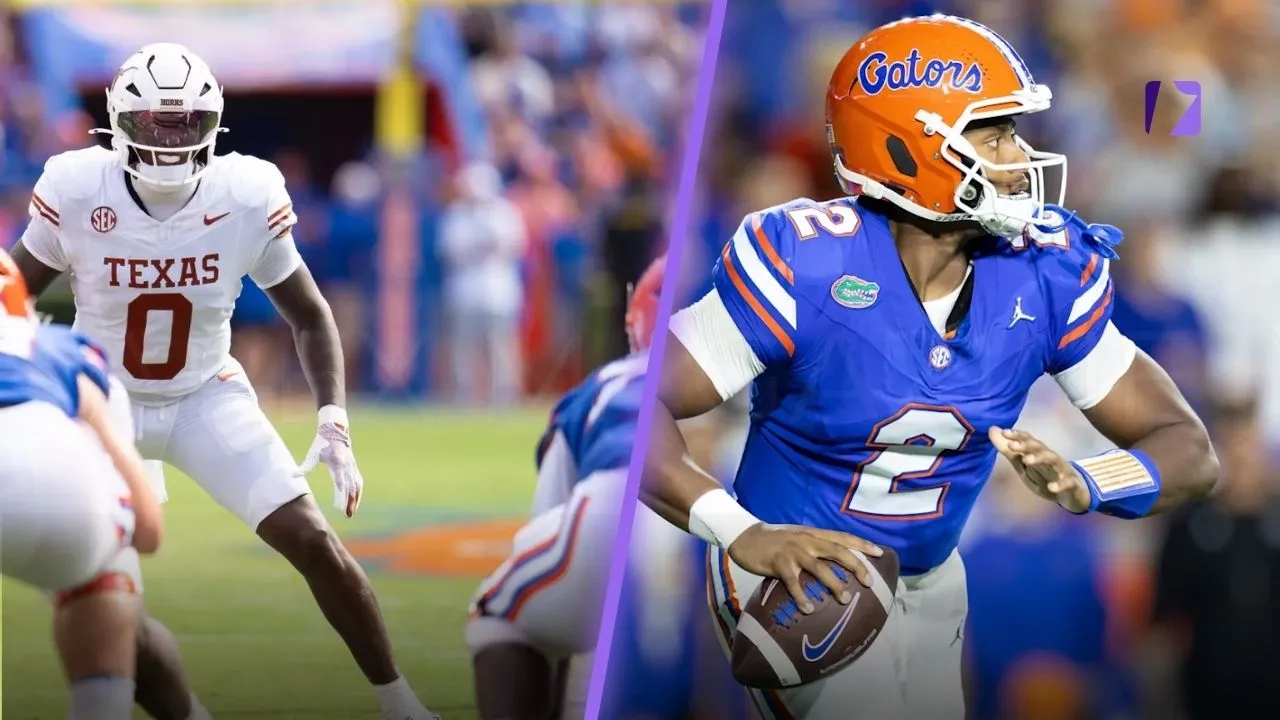
When evaluating Florida Gators football vs Texas Longhorns football match player stats, rushing production is just as important as passing.
Florida’s offensive line created consistent running lanes, which allowed their primary running back to average solid yards per carry. While there may not have been a 60-yard breakout run, the steady five- and six-yard gains kept the offense ahead of schedule. Statistically, that kind of consistency boosts time of possession and reduces defensive fatigue.
Texas, on the other hand, relied on explosive runs. Their top back showed elite acceleration and breakaway speed, resulting in one or two high-impact carries that dramatically inflated total rushing yards. However, outside of those big plays, Florida’s defensive front limited gains effectively. When analyzing rushing stats, it is crucial to look beyond total yardage and examine efficiency per down.
Yards after contact is another revealing metric. Florida’s backs demonstrated physicality, gaining extra yards even when initial gaps closed quickly. Texas relied more on speed and outside runs. This stylistic contrast shows up clearly in advanced rushing metrics and tells a deeper story than total rushing yards alone.
Receiving Corps: Separation, Target Share, and Big-Play Ability
Wide receivers and tight ends often turn balanced games into offensive showcases. In this matchup, both teams had standout performers.
Florida’s top receiver led the team in targets and receptions, functioning as a reliable safety valve on third downs. His stat line reflected consistency rather than flash: multiple catches, moderate yardage, and critical chain-moving plays. From a statistical standpoint, high target share and catch rate indicate trust between quarterback and receiver.
Texas showcased a different profile. Their primary receiver recorded fewer receptions but significantly higher yards per catch. This indicates a vertical passing strategy. One deep touchdown pass can completely change momentum, and Texas capitalized on at least one such opportunity.
Tight end usage also played a role. Florida integrated their tight end into red-zone schemes, resulting in valuable scoring production. Texas used their tight end more in blocking support, which may not show up directly in receiving stats but contributed to their explosive rushing attempts.
Overall, when comparing Florida Gators football vs Texas Longhorns football match player stats at the receiving level, Florida emphasized possession and efficiency, while Texas leaned into explosive potential.
Defensive Standouts: Tackles, Sacks, and Turnover Impact
Offensive stats get attention, but defense often decides these heavyweight matchups.
Florida’s defensive line generated steady pressure. While sack totals may not have been overwhelming, consistent quarterback hurries disrupted Texas’ timing. In advanced defensive metrics, pressure rate is often more important than sack totals alone. Florida excelled in that category.
Texas countered with strong linebacker play. Their leading tackler posted double-digit tackles, demonstrating range and sideline-to-sideline pursuit. When analyzing defensive stats, total tackles tell part of the story, but tackles for loss and third-down stops reveal true impact. Texas’ defense recorded key third-down stops that kept the game competitive.
Turnovers were another defining statistical element. A single forced fumble or interception can swing win probability dramatically. Florida’s secondary capitalized on a risky deep throw, recording an interception that halted a promising Texas drive. That stat may appear small in the box score, but its situational impact was massive.
In high-level college football, defensive efficiency rating often correlates directly with outcome. Florida’s ability to limit explosive plays ultimately made a statistical difference.
Special Teams Contributions: Hidden Yardage and Field Position
Special teams rarely headline postgame conversations, but the numbers often reveal their importance.
Florida’s kicker delivered consistent field goal accuracy, converting every attempt inside 45 yards. That reliability adds quiet points to the scoreboard and increases coaching confidence on fourth downs. Texas’ kicker also performed well but faced a longer attempt that fell short, slightly affecting overall scoring momentum.
Punt return and kickoff return stats were equally influential. Florida’s returner averaged strong yardage, consistently giving the offense favorable starting field position. Texas, meanwhile, prioritized coverage discipline, limiting big returns but sacrificing potential field-flipping plays of their own.
Net punting average is another overlooked metric. Florida’s punter consistently pinned Texas inside their 20-yard line. That hidden yardage forces longer offensive drives and increases the likelihood of defensive stops. When reviewing the complete statistical breakdown, special teams often explain why one team consistently started drives in better field position.
Advanced Metrics and Game Flow Analysis
Beyond traditional stats, advanced metrics provide deeper clarity.
Time of possession favored Florida, reflecting their balanced and sustained drives. That metric not only impacts fatigue but also reduces opportunities for explosive offenses like Texas.
Third-down conversion percentage was another decisive stat. Florida converted at a higher rate, keeping drives alive and limiting Texas’ offensive opportunities. Meanwhile, Texas’ reliance on big plays meant that stalled drives occurred more frequently when explosive attempts failed.
Explosive play differential also deserves attention. Texas generated more 20+ yard plays, but Florida limited those plays at critical moments. In advanced analytics, controlling explosive plays while sustaining efficient drives often produces better win probability outcomes.
Penalty yardage also factored in. Texas committed slightly more penalties, which extended Florida drives and disrupted offensive rhythm. Even small infractions can compound over four quarters.
Final Thoughts: What the Player Stats Truly Reveal
When breaking down Florida Gators football vs Texas Longhorns football match player stats, it becomes clear that numbers tell multiple stories. Texas displayed explosiveness, athleticism, and big-play potential. Florida emphasized balance, efficiency, and situational execution.
Quarterback efficiency favored Florida. Explosive receiving plays leaned toward Texas. Defensive pressure was steadier from Florida, while tackle volume stood out for Texas linebackers. Special teams consistency gave Florida a subtle but meaningful edge.
In matchups between elite programs, the difference rarely lies in total yardage alone. It is about efficiency in critical moments: third downs, red-zone execution, turnover margin, and field position. Those areas ultimately shape the final outcome.
Both programs continue to represent the highest tier of college football competition. Whether competing in the Southeastern Conference or navigating challenges associated with historic rivalries and national schedules, games like this reinforce why fans remain captivated.